Something Is Off: The Persistent Failure of AI Lip Sync and What It Reveals About Human Perception
There is a particular kind of unease that settles over a viewer when they watch a face that is almost right. The voice is present. The lighting is convincing. The background holds together seamlessly. And yet something in the mouth—some invisible quality in the way the lips move against the syllables being spoken—sends a quiet alarm through the nervous system. The audience may not be able to name it. But they feel it immediately.
This is the current state of AI-generated lip synchronization, and it represents one of the most instructive failures in contemporary visual media. Not because the technology is primitive—it is, in many respects, astonishing—but because the gap it cannot yet close reveals exactly how sophisticated human facial perception actually is.
The Face as a Primary Communication System
Human beings are, by evolutionary design, expert face readers. From the first weeks of life, the human brain develops dedicated neural architecture for processing facial information. By adulthood, a person has spent decades training on the most complex visual dataset imaginable: other people's faces in motion, under every lighting condition, across every emotional register.
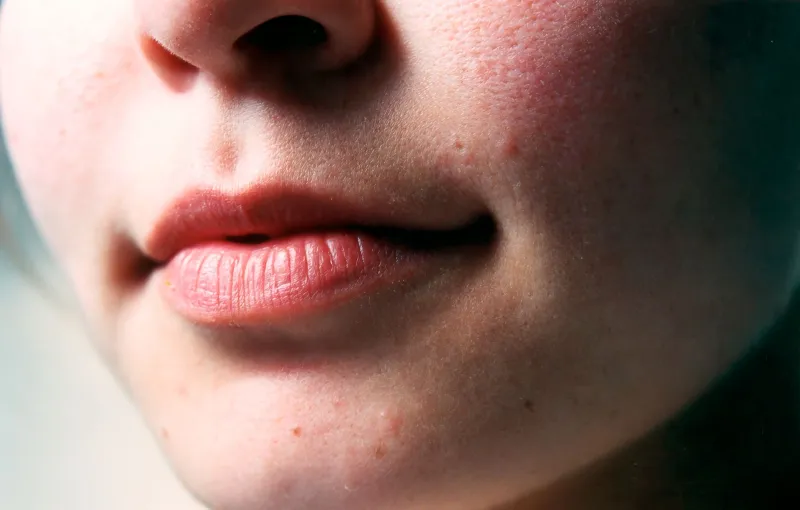
The mouth, in particular, carries an extraordinary density of communicative information. When someone speaks, the lips are not simply opening and closing in response to sound. The jaw, tongue, cheeks, and surrounding musculature are engaged in a continuous, interdependent choreography. The corners of the mouth shift fractionally before the lips part. The philtrum compresses differently depending on whether a vowel or a consonant is being formed. The chin moves in ways that are partially visible and partially felt by the speaker—and, remarkably, partially anticipated by the observer.
AI systems attempting to replicate this process are, at their core, pattern-matching engines. They have ingested enormous quantities of footage and learned statistical associations between audio waveforms and visible mouth positions. What they have not learned—and what remains extraordinarily difficult to encode—is the underlying physics and biology that generate those patterns in the first place.
Where the Synchronization Actually Breaks
The most commonly cited problem in AI lip sync is timing delay: the moment when a mouth movement arrives a fraction too late, or too early, relative to the audio. This is measurable and, to some degree, correctable. But it is also the least interesting of the failures.
More revealing are the inconsistencies in what researchers sometimes call co-articulation—the way that each phoneme shapes not just the mouth position at its own moment, but the transition into and out of adjacent sounds. Human speech is not a sequence of discrete mouth positions. It is a continuous flow in which each sound is already preparing for the next. The lips begin rounding for a vowel before the preceding consonant has fully resolved. The jaw anticipates a closing sound while the tongue is still forming an opening one.
AI-generated animation tends to treat these transitions as interpolation problems—moving from point A to point B along a calculated path. The result is movement that is technically present but mechanically smooth in a way that organic speech never is. Human articulation contains micro-hesitations, asymmetries, and muscular resistances that read as authentic even when they are imperceptible at a conscious level.
There is also the matter of secondary facial movement. When a person speaks, the activity is never confined to the lips. The cheeks shift. The nostrils flare slightly on certain fricatives. The eyes adjust their focus in ways that are faintly coordinated with the rhythm of speech. These secondary signals are not random; they are structurally connected to the act of speaking. AI systems that generate mouth movement in relative isolation from the rest of the face produce a visual disconnect that viewers register as wrongness without necessarily identifying its source.
The Neurological Alarm System
The discomfort audiences experience when watching failed lip sync is not simply aesthetic disappointment. It activates something closer to a threat-detection response. The human brain is primed to notice when a face is behaving inconsistently—historically, this has been important information. A face that does not match its voice, or whose movements do not cohere with the sounds being produced, signals deception, neurological disturbance, or some other condition that warrants attention.
This is the uncanny valley in its most specific form. The concept, originally articulated by roboticist Masahiro Mori in the 1970s, describes the discomfort generated by representations that are almost—but not quite—human. In the context of lip sync, the valley is particularly steep because the mouth is such a primary focus of attention during speech. Viewers are not casually observing the face; they are actively decoding it. Every deviation from expected behavior is processed immediately.
The irony is that lower-fidelity animation often escapes this response entirely. A stylized cartoon character, a puppet, or a deliberately abstracted avatar does not trigger the alarm because it never claimed to be real. It is the attempt at photorealism that creates the danger zone—the closer the image gets to human, the more precisely the brain measures its failures.
What Practitioners Are Learning to See
For filmmakers, designers, and visual media professionals working in the current landscape, the practical implication is clear: AI-generated lip sync requires human intervention if it is to be used in serious work. The most technically proficient practitioners are not simply running synthesis tools and accepting the output. They are developing refined visual literacy around the specific tells that mark AI-generated facial animation.
These tells include the characteristic smoothness of AI-interpolated transitions, the absence of micro-asymmetries in lip movement, the occasional failure of the mouth to fully close between syllables, and the disconnection between oral movement and the surrounding facial musculature. Skilled editors are learning to use these observations not just as quality-control checkpoints, but as creative information—understanding which shots require the most correction and which contexts are most forgiving.
Some practitioners are going further, deliberately studying authentic speech footage with the same analytical attention they would bring to lighting or color grading. The goal is to internalize the grammar of real facial movement so completely that deviations become immediately legible. This is, in effect, a new form of visual literacy—one that did not exist as a professional skill five years ago.
The Distance That Remains
It would be inaccurate to suggest that AI lip synchronization is not improving. The technology is advancing rapidly, and the gap between synthetic and organic facial animation is narrowing in measurable ways. Some current systems produce results that are genuinely difficult to distinguish from authentic footage under casual viewing conditions.
But casual viewing conditions are not the standard that serious visual media demands. Audiences watching a film, an advertisement, or a carefully produced piece of branded content are not passive recipients. They are active perceivers with finely calibrated detection systems trained across a lifetime of watching real human faces. Meeting that standard requires not just better algorithms, but a deeper structural understanding of what makes facial movement feel inhabited rather than simulated.
The mouth, it turns out, is not simply an output device. It is an expression of the entire physical and emotional architecture of a speaking human being. Until AI systems can model that architecture with genuine fidelity—rather than approximating its surface appearance—the uncanny valley of lip sync will remain one of visual media's most instructive and unresolved frontiers.