Pixels Don't Bleed: Why Audiences Are Choosing Grit Over Perfection in the Age of Infinite Rendering Power

The Paradox at the Heart of Modern Visual Media
There is something quietly ironic about the current moment in visual production. The tools available to designers, animators, and brand studios have never been more powerful. Rendering engines can simulate subsurface light scatter through human skin. Particle systems replicate the behavior of smoke, water, and fire with physical accuracy. Motion capture translates the nuance of a performer's expression into a digital character with near-perfect fidelity. And yet, across advertising campaigns, streaming content, and social media, a measurable audience preference is emerging—not for these technical achievements, but for footage that looks like it was shot on a borrowed camera in difficult light.
This is not nostalgia. It is not a passing aesthetic trend. It is a signal about how human perception assigns meaning to images, and visual media professionals who understand it hold a significant strategic advantage.
What the Research Tells Us About Perceived Authenticity
The concept of the uncanny valley—originally articulated by roboticist Masahiro Mori in reference to humanoid robots—describes the unsettling effect that occurs when a representation of a human being becomes almost, but not quite, convincing. The closer the approximation to reality, the more acutely viewers register the remaining gaps. What was once charming becomes disturbing. The emotional response inverts.
Visual media researchers and cognitive psychologists have begun applying this framework beyond robotics, and the implications for digital imagery are substantial. When a 3D render achieves a high level of photorealism, it does not simply succeed or fail at looking real. It enters a perceptual gray zone where the brain simultaneously processes it as both artificial and lifelike—and the dissonance generated in that space carries an emotional cost. Viewers may not consciously identify the source of their discomfort, but they feel it. Trust erodes. Engagement becomes surface-level.
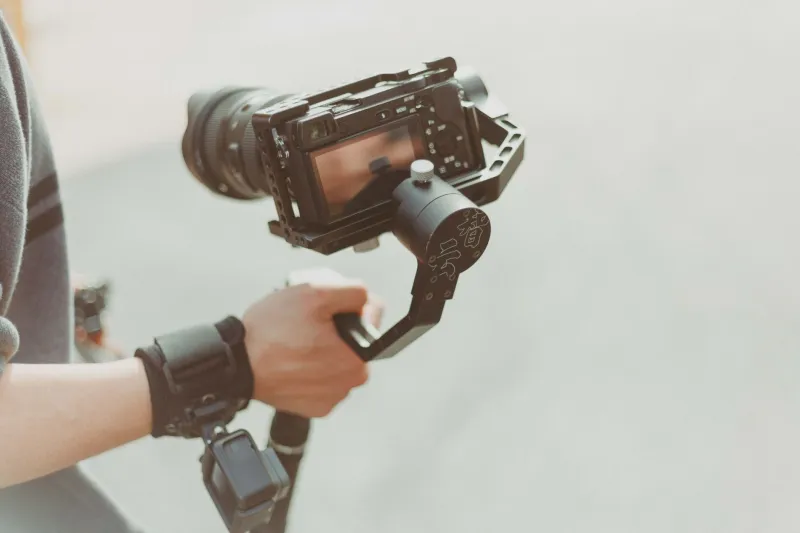
Documentary footage, by contrast, arrives pre-loaded with contextual cues that signal genuine experience. The slight motion blur on a handheld shot. The imperfect color temperature shift when a subject moves from shadow into sunlight. The ambient audio bleed from an uncontrolled environment. These are not flaws in the traditional sense. They are proof of presence—evidence that a camera existed in a real space alongside a real person during a real moment.
Why Brands Are Walking Away from the Polished Render
The advertising industry has been among the first to register this shift in measurable terms. For years, the premium visual benchmark for consumer brands—particularly in automotive, luxury goods, and technology—was the flawlessly rendered product visualization. Every surface was perfect. Every reflection was controlled. Every shadow fell exactly where the art director intended.
That standard is now being actively questioned inside major creative agencies. Not because the renders look bad, but because they have begun to feel dishonest in a cultural climate that has grown deeply skeptical of manufactured perfection. American consumers, in particular, have developed a sophisticated visual literacy shaped by years of social media content, documentary streaming, and user-generated footage. They have internalized the visual language of authenticity, and they apply it as a filter when evaluating brand communications.
The result is a growing body of campaigns that deliberately incorporate raw visual elements—location footage shot in available light, interviews filmed without teleprompters, product demonstrations that allow for the occasional imperfect moment. These choices are not budget-driven. In many cases, the production cost of creating this aesthetic intentionally is comparable to a traditional polished execution. The difference is philosophical.
The Creator Economy Has Accelerated the Shift
Beyond brand advertising, the broader creator economy has played a significant role in recalibrating audience expectations. Platforms like YouTube, TikTok, and Instagram have elevated individual voices whose production values are modest by any conventional measure. What these creators offer instead is directness—a sense that the person behind the camera is unmediated, unscripted, and genuinely present.
When a creator with a consumer-grade camera and natural window light generates more emotional connection than a fully produced brand spot with a six-figure render budget, it forces a fundamental question: what is visual production actually for? If the goal is emotional resonance and audience trust, then technical sophistication is not inherently an asset. In some contexts, it may actively work against the intended outcome.
This does not mean that high-end production is losing its value. It means that production value, in isolation, has ceased to be a differentiator. The visual media industry is being asked to compete on a more demanding criterion: meaning.
Grit as a Design Decision, Not a Default
What separates the most effective practitioners of this aesthetic from those who simply reduce their production quality is intentionality. Grain, handheld movement, color inconsistency, and ambient imperfection are most powerful when they are chosen—when they serve a specific communicative purpose rather than reflecting a lack of resources or craft.
The best documentary cinematographers have always understood this. The decision to use a longer lens that compresses space, or to allow a subject to move into partial darkness rather than correcting the exposure, is an authorial act. It shapes how the viewer receives the moment. Applied with precision, these choices do not diminish a visual work. They locate it in the world of genuine human experience.
For studios and creative directors working in the current environment, the practical implication is clear: the question is no longer whether your imagery is technically flawless. The question is whether it is emotionally credible. Those two things are not the same, and confusing them is one of the more costly mistakes a visual brand can make.
Elevating the Raw Without Undermining It
The challenge for professional visual media practice is developing the discipline to know when restraint serves the work and when it abandons it. Not every brand, not every story, and not every context calls for documentary roughness. There are visual languages in which precision and control are precisely the right tools—where the clean render or the meticulously lit studio frame communicates exactly what the moment requires.
The skill lies in reading the emotional register of a project and matching the visual approach to it honestly. That kind of judgment—knowing when imperfection is the more sophisticated choice—is what distinguishes a thoughtful visual practice from one that simply follows trend cycles.
At its core, the audience preference for raw footage over pristine renders is a preference for evidence of human experience over evidence of technical capability. Pixels, no matter how precise, do not carry the weight of a moment that actually happened. In an era of unlimited visual possibility, the most powerful thing a piece of imagery can communicate may simply be that it is real.