What the Cut Doesn't Show: Mastering Editing Rhythm to Shape Emotional Experience
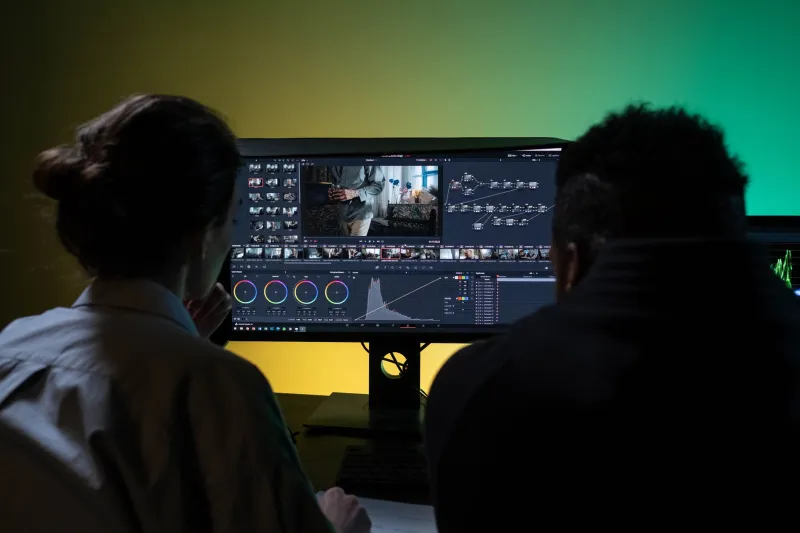
There is a persistent misconception in visual storytelling that the image is sovereign—that meaning lives exclusively within what the camera captures. Yet any editor of serious experience will offer a different account. The cut itself, and more precisely the timing of that cut, is where emotional truth is either confirmed or quietly dismantled. The space between shots is not dead air. It is the breath of the narrative.
For independent creators working with limited resources and established studios managing complex post-production pipelines alike, the discipline of editing rhythm represents one of the most underexamined dimensions of craft. Understanding how temporal composition functions—how long to hold, when to release, and when to withhold entirely—is the difference between a film that audiences feel and one they merely watch.
Duration as a Dramatic Instrument
Every shot carries an implicit contract with the viewer. When that contract is honored—when the cut arrives exactly when the audience expects it—the experience becomes comfortable, even invisible. Conventional commercial editing operates largely on this principle: maintain momentum, minimize friction, keep the viewer oriented. This approach is functional and often appropriate.
But comfort is rarely where emotional weight resides.
When a shot is held beyond its expected conclusion, something measurable happens in the viewer's psychology. The brain, denied the habitual relief of a new image, begins to supply its own meaning. Attention intensifies. The viewer leans into the frame rather than passively receiving it. Directors such as Barry Jenkins have employed this technique to profound effect—holding on an actor's face several beats past the conventional cut point, allowing the audience to inhabit a moment of grief or recognition rather than simply observe it. The extended duration transforms the viewer from spectator to participant.
Conversely, a cut that arrives before the viewer is ready—the truncated shot, the abruptly terminated scene—generates a very different emotional register. Disorientation, urgency, anxiety. Action sequences frequently exploit this principle, but its application extends well beyond genre conventions. A documentary that cuts away from a subject mid-sentence can communicate distrust or evasion without a single word of narration.
The Architecture of Tension: Rhythm as Structural Design
Editing rhythm is most usefully understood not as a sequence of individual decisions but as a cumulative architecture. The tempo established in a film's opening minutes creates the baseline against which all subsequent pacing is measured. Deviations from that baseline—accelerations, decelerations, sudden stillness—register emotionally in direct proportion to how clearly the baseline was established.
Consider the structural logic employed across the editing of Denis Villeneuve's Arrival. The film's deliberate, unhurried pacing in its early sequences is not passive. It is load-bearing. Each extended, contemplative shot deposits expectation into the viewer's emotional account. When the film's climactic revelations arrive, they carry the accumulated weight of everything that preceded them. The rhythm made the stakes legible before the story explicitly articulated them.
Independent filmmakers working without the budget advantages of major productions have, in some cases, developed an even more sophisticated relationship with pacing precisely because they cannot rely on spectacle to generate engagement. A single, well-held shot in a modestly produced drama can accomplish more than a rapid succession of visually elaborate images that have not been allowed to breathe.
Silence and Stillness as Active Choices
Perhaps the most counterintuitive insight in the study of editing rhythm is that absence—of movement, of cuts, of visual information—functions as a form of presence. The held wide shot of an empty landscape after an emotionally charged scene does not represent a pause in the storytelling. It is the storytelling. It provides the audience with the temporal space to process what they have just experienced, to feel rather than immediately receive the next piece of information.
This principle has deep roots in American independent cinema. Filmmakers operating in the tradition of Terrence Malick or Kelly Reichardt have built entire aesthetic philosophies around the productive power of visual restraint. Their work demonstrates that an audience's imagination, when given sufficient space to operate, will generate emotional resonance far more personal and durable than any explicitly constructed image.
For creators working in shorter formats—branded content, short films, documentary segments—this principle requires recalibration but does not disappear. Even within a two-minute piece, the strategic placement of a held shot or a moment of visual quiet can function as a pivot point that elevates the surrounding material.
Practical Approaches for Working Editors
Translating these principles into actionable practice begins with a single discipline: watching your own cut with the sound off. Audio, including music, is extraordinarily effective at masking pacing problems. A cut that feels emotionally appropriate with a swelling score may reveal itself as premature or overextended in silence. The picture edit must carry its own rhythmic logic before sound design is introduced.
A second practice involves mapping the emotional arc of a sequence before beginning the cut. Rather than assembling the best individual moments and then shaping them into order, consider first identifying the emotional destination of the sequence and working backward. What rhythm is required to arrive at that destination with appropriate impact? Which shots need to breathe, and which should be compressed to generate urgency?
Finally, study editing rhythm across formats and genres with deliberate attention. The measured pacing of a prestige drama and the propulsive cutting of a well-constructed commercial are both sophisticated solutions to different problems. The editor who understands the full range of rhythmic possibility—and who can move fluidly between registers—possesses a genuinely rare and valuable skill set.
The Editor as Emotional Architect
There is a reason that some of the most respected figures in the history of cinema have been editors. Walter Murch, Thelma Schoonmaker, Anne V. Coates—these practitioners understood that their work was not the arrangement of footage but the management of time itself. They shaped when audiences would feel, and how deeply.
For contemporary creators navigating an environment saturated with visual content, the discipline of editing rhythm offers a meaningful point of differentiation. In a landscape where production values have become increasingly democratized and visual polish is no longer a reliable proxy for quality, the capacity to control emotional experience through temporal composition is a genuine craft advantage.
The silence between cuts is not empty. It is where the work happens.