Without a Word: The Return of Pure Visual Narrative in Contemporary Storytelling
There is a particular kind of confidence required to tell a story without speaking. No voiceover to guide the viewer. No scripted exchange to clarify intent. Only the frame, the light, the movement, and the edit—working in concert to carry meaning across the screen and into the audience's emotional register. Yet across independent film festivals, brand campaigns, and the compressed visual landscape of social media, this exact approach is experiencing a quiet but unmistakable resurgence.
Dialogue-free storytelling is not simply a stylistic flourish. It is, at its most effective, a precise act of visual design—one that demands rigorous compositional thinking and a deep understanding of how images communicate when language is removed from the equation.
A Language Older Than Words
Long before synchronized sound transformed cinema in the late 1920s, filmmakers like F.W. Murnau and D.W. Griffith were constructing narratives of extraordinary emotional complexity using nothing but image and intertitle. The grammar they developed—close-ups that conveyed interiority, cutting rhythms that built tension, framing that established power dynamics—did not disappear when sound arrived. It was simply layered beneath dialogue and often forgotten.
Contemporary filmmakers are rediscovering that grammar with fresh eyes. Short films circulating on platforms like Vimeo and YouTube routinely forgo spoken word entirely, relying instead on performance, environment, and editorial timing to deliver narratives that resonate across cultural and linguistic boundaries. This universality is no accident. When a story is freed from the specificity of language, it becomes structurally available to a far wider audience—a consideration that carries enormous weight in an era of globally distributed content.
The Brand Campaign That Said Nothing and Sold Everything
In advertising, the dialogue-free approach has moved well beyond experimental territory. Several of the most widely discussed brand campaigns of recent years have operated entirely without spoken language, instead building their arguments through visual sequence, music, and the careful orchestration of human expression. Apple's product launches have long leaned into this sensibility. Nike's most emotionally potent spots frequently reduce dialogue to near-zero, trusting the athleticism on screen to carry the narrative load.
The logic is straightforward from a strategic standpoint. A wordless campaign does not require localization in the same way a scripted one does. It does not age in the same manner. And it places the full burden of communication on the visual team—a burden that, when met with genuine craft, produces work of lasting impact.
For design studios and production houses, this represents both a creative challenge and a significant professional opportunity. Building a campaign around pure visual language demands that every element—color palette, pacing, subject framing, environmental context—carry communicative weight. There is no dialogue to catch a weak composition or rescue an uncertain edit.
Attention, Compression, and the Scroll Economy
The resurgence of wordless storytelling is also inseparable from the behavioral shifts that social media has accelerated. On platforms like Instagram Reels and TikTok, audio is frequently muted by default or consumed in environments where sound is impractical. Creators who rely on spoken dialogue risk losing a substantial portion of their audience in the first few seconds.
Visual storytellers who have internalized the dialogue-free discipline are, in many respects, better equipped for this environment than those who have not. Their work is designed from the ground up to communicate through image. The caption, if it exists at all, supplements rather than substitutes.
This does not imply that brevity and sophistication are mutually exclusive. Some of the most formally accomplished wordless work circulating online operates in the thirty-second to two-minute range, compressing narrative arcs that would typically require far more screen time. The compression itself becomes an aesthetic quality—a form of visual haiku in which every frame is chosen with deliberate economy.
What the Performer Must Carry
Removing dialogue places an extraordinary demand on the performers at the center of a visual narrative. Without words to articulate internal states, the face and body become the primary instruments of communication. This is a reality that separates dialogue-free work from other forms of screen performance in fundamental ways.
Directors working in this mode frequently cite the influence of physical theater traditions—Lecoq technique, Viewpoints, and Butoh among them—as touchstones for how they approach performance direction. The goal is not pantomime, which tends toward exaggeration and legibility at the expense of naturalism. It is something more nuanced: a heightened physical presence that reads as authentic rather than performed, even when the emotional register is deliberately amplified.
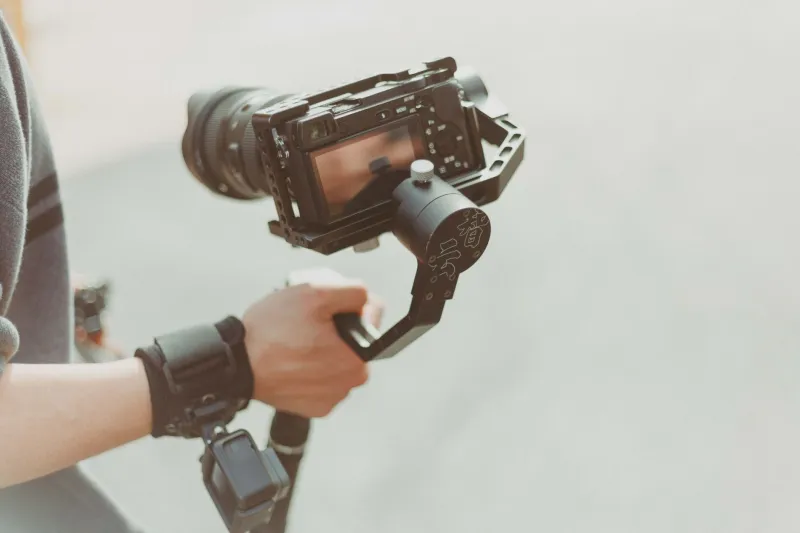
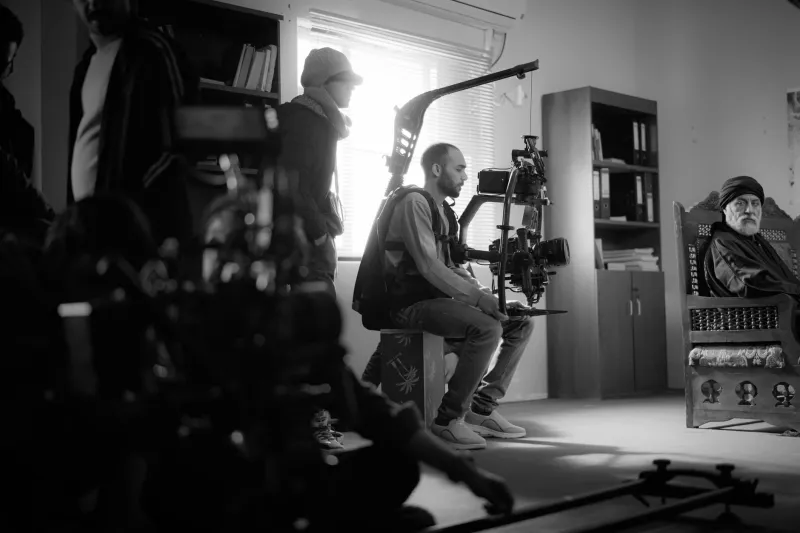
For the cinematographer, this creates an equally demanding responsibility. The camera must be positioned and moved in ways that honor and extend the performer's physical expression. A slightly misaligned angle can diminish what an actor is offering. The right one can transform a subtle gesture into a definitive narrative statement.
Design as the Primary Narrator
Perhaps the most significant implication of the dialogue-free approach is the degree to which it elevates production design, color grading, and editorial rhythm to the status of primary storytelling tools rather than supporting ones. When language is absent, the environment in which a story unfolds must communicate character, context, and emotional tone through its visual properties alone.
A production designer working on a wordless narrative cannot defer to a character's spoken description of their circumstances. The set, the wardrobe, the light quality, and the color temperature must do that work instead. This is visual storytelling at its most demanding and, when executed with genuine skill, at its most rewarding.
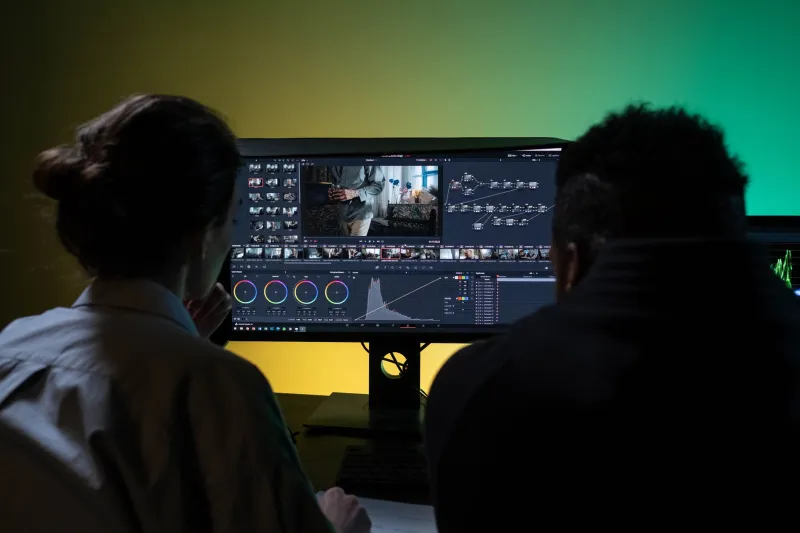
Color grading in particular takes on a heightened significance. The tonal shift from a warm, saturated palette to a cooler, more desaturated one can function as a narrative transition, communicating a change in emotional state or temporal context without a single word of exposition. Colorists working on dialogue-free projects frequently describe the experience as one of the most creatively engaged collaborations they undertake.
The Argument for Restraint
What the resurgence of wordless storytelling ultimately suggests is that audiences are not, as is sometimes assumed, demanding more stimulation and more information at every moment. In many cases, they are responding with particular depth to work that trusts them to complete the meaning themselves—to bring their own emotional experience to a visual invitation rather than receiving a fully constructed interpretation.
This is the quiet argument at the heart of dialogue-free narrative: that restraint, properly applied, is not absence but presence. The space where language would have been is not empty. It is filled by the viewer, which is precisely where the most durable forms of audience engagement are forged.
For studios and independent creators alike, the discipline required to tell a story without words is among the most rigorous in the visual medium. It is also, increasingly, among the most relevant.