Layers of Meaning: How Nested Framing Builds Visual Depth Before the Camera Ever Rolls
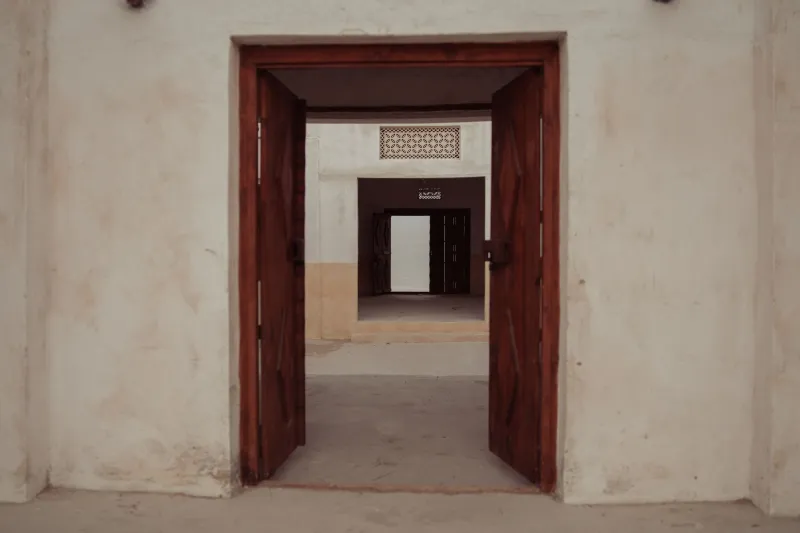
There is a particular kind of visual satisfaction that occurs when a viewer's eye travels through a photograph or a film frame and discovers that the image contains more than it first appeared to. A hallway that opens onto a lit room. A window that frames a figure standing in a courtyard beyond. An archway through which an entire second world seems to exist. This sensation—the feeling of moving through layers of reality—is not the product of sophisticated rendering pipelines or layered composites. It is the result of nested framing: the deliberate placement of compositional boundaries within the primary image boundary to create psychological depth that no software can fully replicate.
For independent filmmakers and photographers operating in the United States without the infrastructure of major studio productions, nested framing represents one of the most powerful and genuinely cost-free tools available. Understanding why it works, and how to deploy it with intention, is the difference between imagery that is technically competent and imagery that genuinely pulls an audience inward.
The Psychology Behind the Frame Within the Frame
Human visual perception is not passive. When the eye encounters a boundary—an edge, a threshold, a contrast between interior and exterior space—the brain interprets that boundary as an invitation. Evolutionary psychology suggests this response is deeply wired: doorways and openings once signaled passage between zones of safety and exposure. Contemporary neuroscience supports the idea that framed views command disproportionate attention precisely because they trigger this ancient evaluative instinct.
When a filmmaker positions a subject within a secondary frame—a character viewed through a partially open door, for instance—the viewer is not simply seeing a person. They are seeing a person who exists in a defined, bounded space within the larger world of the image. The nested boundary creates a hierarchy of attention. It tells the audience: this is where to look, and this space has meaning. The psychological weight of that containment is considerable.
This is why nested framing has persisted across art history from Renaissance painting to classical Hollywood cinematography to contemporary independent production. It is not a stylistic trend. It is a fundamental mechanism of how human beings process spatial information.
Architectural Framing: Working With What Already Exists
For creators working with limited budgets, the built environment is an extraordinary resource. American cities, suburbs, and rural landscapes are populated with natural framing opportunities that most shooters walk past without recognizing.
Doorways are the most obvious entry point, but the most interesting applications go further. Industrial buildings offer framing through broken walls, scaffolding grids, and stacked structural elements. Historic districts in cities like Savannah, Charleston, or New Orleans provide ornate archways and colonnaded galleries that create layered depth with minimal staging. Even suburban environments—often dismissed as visually uninteresting—offer garage door openings, fence gaps, and window arrangements that can be exploited with careful positioning.
The key discipline is active scouting. Before a single setup is built, the serious visual creator walks a location specifically looking for existing frames within frames. Where does one architectural element create a boundary through which another meaningful space is visible? Where can a subject be positioned so that the surrounding structure contains and defines them without overwhelming the composition? These are the questions that transform a location from a background into a visual instrument.
Natural Boundaries and Organic Depth
Architecture is not the only source of nested compositional structure. Natural environments offer equally powerful framing opportunities that carry their own distinct emotional register.
Tree canopies create overhead frames that define the ground plane beneath them as a stage. Rock formations in landscapes across the American Southwest—from the canyon country of Utah to the coastal headlands of Northern California—present aperture-like openings through which subjects and distant environments can be viewed simultaneously. Even something as simple as tall grass or dense foliage on either side of a pathway creates a corridor effect that directs the viewer's gaze with precision.
The emotional quality of natural framing differs meaningfully from architectural framing. Where doorways and archways suggest human intention and social context, natural boundaries evoke exposure, scale, and the relationship between the individual and the environment. A figure framed by rock walls reads differently than a figure framed by a tenement doorway, even if the compositional geometry is structurally similar. The thoughtful creator chooses framing materials not just for their visual effect but for their narrative resonance.
Layering as a Storytelling Strategy
Nested framing becomes most powerful when it is deployed not as decoration but as a narrative instrument. The question is not simply can I fit a frame within this frame, but what does this layering tell the audience about the relationship between spaces, between characters, or between a character and their world?
Consider the classic visual language of surveillance and observation: a character watched through a window, framed by the pane and the darkness beyond it. The nested geometry instantly communicates voyeurism, distance, and power asymmetry without a single line of dialogue. Or consider the opposite application—a character who stands within a frame of light surrounded by shadow, contained within the brightness as if protected or isolated. The same structural tool produces entirely different emotional meaning depending on how light, subject placement, and secondary framing are orchestrated together.
Independent filmmakers who develop fluency in this language gain something that digital enhancement cannot provide: compositional arguments that exist within the photography itself, that communicate before the audience has consciously registered what they are looking at.
Practical Application: Building Depth Without Budget
For creators actively developing their visual practice, the application of nested framing requires discipline at the pre-production stage. Several principles are worth establishing as consistent habits.
First, treat every location scout as a framing audit. Move through spaces looking specifically for depth corridors—sightlines through which a subject can be placed at one spatial plane while a secondary environment is visible at another. Photograph these opportunities at eye level, low angle, and elevated positions, because the framing geometry changes dramatically with camera height.
Second, resist the impulse to clean up the frame. Foreground elements that partially obscure the primary subject—a pillar edge, a hanging fabric, a piece of equipment—often strengthen nested depth rather than compromising it. The partial occlusion reinforces the sense that the viewer is looking through something rather than simply at something.
Third, use focus deliberately. Shallow depth of field that softens a foreground framing element while keeping the subject sharp creates a layered spatial hierarchy that the eye reads as genuine depth. Deep focus that keeps all planes sharp creates a different effect—one that invites the viewer to move through the image rather than being directed to a single point.
Finally, study the masters not to imitate them but to understand their spatial logic. The work of Gordon Willis, Vilmos Zsigmond, and Gordon Parks in American cinema and photography is saturated with nested compositional thinking. Frame grabs from their work, studied in isolation, reveal how consistently these artists built spatial architecture into their images before any other consideration.
Depth as a Visual Commitment
The resurgence of interest in nested framing among independent creators reflects something broader: a growing recognition that visual sophistication is not a function of technical resources. The most arresting images in contemporary American independent cinema and photography are frequently those that demonstrate the deepest understanding of classical compositional principles—principles that predate cinema itself.
Nested framing is, at its core, a commitment to building meaning into the geometry of an image. It is a statement that the space within the frame has been considered, that the layers of that space have been arranged with intention, and that the viewer's eye will be guided not by algorithmic enhancement but by the deliberate intelligence of a human creator. In an era of increasingly automated visual production, that commitment carries weight. It is the mark of craft, and craft—properly understood—is the foundation of everything The VME Studio stands for.