Lost in the Long Shot: How Motion Capture Betrays Digital Doubles the Moment They Start Moving
The Illusion That Holds Until It Doesn't
There is a particular moment in contemporary blockbuster filmmaking that audiences have learned to recognize without fully understanding why they recognize it. A character — rendered with extraordinary detail, dressed convincingly, lit with technical precision — begins to run, and something collapses. The face holds. The costume holds. But the body, moving through open space, betrays everything.
Motion capture has matured into one of the most consequential tools in modern visual production. Its achievements in facial performance, in upper-body expressiveness, in the controlled choreography of combat sequences shot at close range, are genuine and significant. Yet the technology carries a persistent vulnerability that becomes most visible precisely when the camera pulls back to reveal the full human form in unrestricted movement. Understanding why that failure occurs — and how filmmakers are responding to it — is essential for any serious practitioner working in visual media today.
What Mocap Does Well and Where It Stops
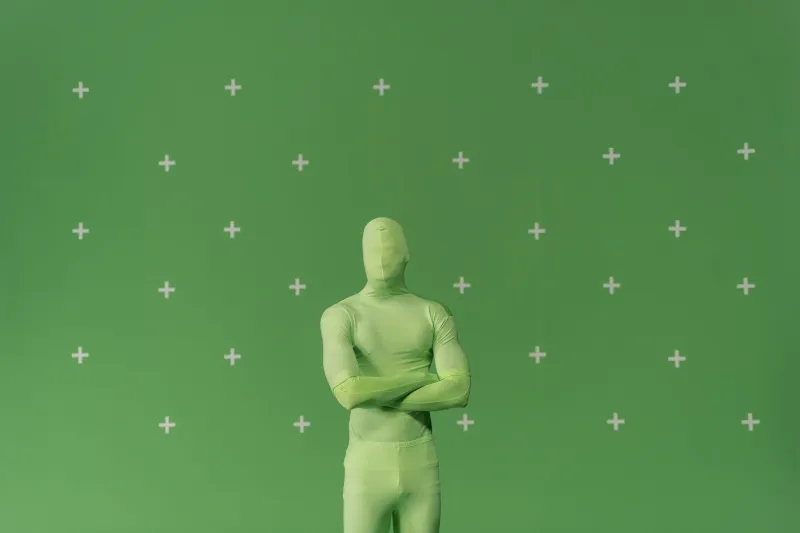
Motion capture excels within constraints. When a performer's movement is bounded — seated, standing still, engaging in dialogue, or executing gestures within a limited physical range — the data pipeline between human motion and digital output performs reliably. The sensors capture what they are designed to capture, and the downstream rendering systems translate that data into convincing animation.
The complications multiply when full-body locomotion enters the equation. Walking, running, jumping, falling — these actions demand that the entire kinetic chain function coherently, from the distribution of weight through the foot strike to the compensatory micro-adjustments that ripple upward through the hips, spine, and shoulders. Human beings perform these adjustments unconsciously and continuously. The biomechanical intelligence involved is staggering in its complexity, and mocap systems, however sophisticated, are capturing a reduced representation of that complexity rather than the thing itself.
The result is a digital double that moves with approximate correctness. And approximate correctness, when placed in a wide shot with environmental context and natural lighting cues, reads as wrong.
The Biomechanical Tells Audiences Cannot Name but Always Feel
Audiences do not typically articulate what they are detecting when a digital double fails in a wide shot. They describe the sensation as something being "off," or the character looking "fake," or the scene feeling "like a video game." These are perceptual responses to specific technical failures that the audience is processing unconsciously.
The most consistent tells involve weight and ground reaction. A real human body compresses slightly on foot strike, redistributes mass through the ankle and knee, and produces a cascade of subtle postural adjustments that communicate the physics of a body operating under gravity. Mocap data, especially when processed and cleaned for delivery, tends to smooth these micro-compressions away. The digital double appears to glide rather than land. It moves across the ground plane rather than through it.
Related to this is the issue of secondary motion — the behavior of clothing, hair, and soft tissue in response to locomotion. Simulation systems have advanced considerably, but they remain reactive rather than integrated. Real clothing responds to the body's movement in ways that are partially predictable and partially chaotic. Simulated clothing follows rules. Audiences who have spent their entire lives watching real fabric move through space can detect the difference at a level below conscious analysis.
Finally, there is the problem of spatial confidence. Human beings moving through real environments make constant micro-corrections in response to the ground surface, air resistance, and their own proprioceptive feedback. Digital doubles, lacking that feedback loop, move with a uniformity that reads as mechanical. The walk cycle that looks perfectly normal in isolation becomes subtly robotic when placed in a richly detailed environment that implies physical consequence.
Why the Wide Shot Exposes What Close Framing Conceals
The relationship between frame size and perceptual scrutiny is not intuitive. One might assume that a wider shot, by showing less detail, would be more forgiving of technical imperfection. In practice, the opposite is often true.
Close framing concentrates audience attention on the face and upper body, which are the elements mocap handles most reliably. The wider the shot, the more of the full kinetic system is visible, and the more the audience's perceptual apparatus shifts from reading emotional expression to reading physical plausibility. A close-up of a digital double speaking is evaluated primarily as a face. A wide shot of that same figure sprinting across a courtyard is evaluated as a body in motion — and bodies in motion are something every audience member has encyclopedic unconscious knowledge of.
This is the fundamental asymmetry that production teams navigating digital double sequences must account for. The technology's strongest performance and its weakest performance are not distributed randomly. They are distributed in direct relationship to how much of the full body is visible and how dynamically that body is moving.
How Directors Are Working Around the Problem
The most effective responses to mocap's wide-shot limitations are not technological — they are editorial and directorial. Experienced filmmakers working with digital doubles have developed a set of practical strategies that manage audience perception without waiting for the underlying technology to close the gap.
Cutting rhythm is the primary tool. Sequences involving digital doubles in full-body motion are typically edited at a faster pace than sequences involving practical performers, reducing the duration of any single wide shot below the threshold at which the perceptual failure becomes registerable. The audience's eye is moved before it has time to settle and analyze.
Framing choices are manipulated to keep the most vulnerable portions of the movement — foot strikes, directional changes, transitions from rest to motion — at the edges of the frame or partially obscured by environmental elements. A character beginning to run is often framed so that the lower body is cut off or in shadow during the first several steps, with the wider reveal arriving once the motion has stabilized into a more reliable portion of the cycle.
Environmental complexity serves as a form of perceptual camouflage. Sequences with significant digital double presence in wide shots are frequently staged in environments with high visual density — crowds, particle effects, weather, rapid lighting changes — that compete for the audience's attention and reduce the perceptual resources available for scrutiny of the digital figure.
The Gap That Remains
None of these strategies eliminate the underlying problem. They manage it, and in skilled hands they manage it well enough that the failure goes unnoticed by most audiences in most contexts. But the gap between what motion capture delivers in wide-shot choreography and what a practical performer delivers in the same frame remains real, and it shapes production decisions at every level.
For visual practitioners working in this space, the honest assessment is that mocap is a powerful tool operating within meaningful constraints. Those constraints are not evenly distributed across all use cases. They concentrate specifically in the wide shot, in full-body locomotion, and in the biomechanical complexity of unrestricted movement through space.
The most sophisticated productions are not those that ignore these constraints, but those that design around them with enough craft that the audience never has cause to look for the seams.