Present but Not There: Why Synthetic Performers Fail to Convince Despite Technical Perfection
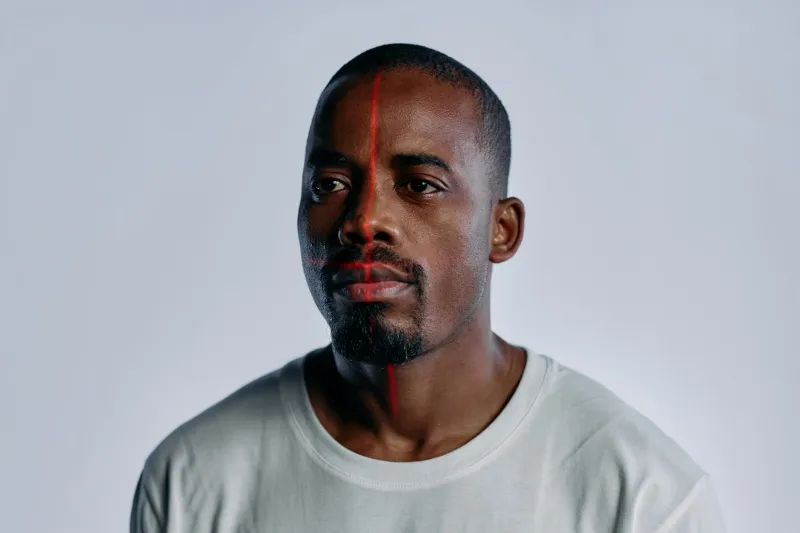
There is a particular discomfort that settles over an audience when something almost human appears on screen. Not quite dread. Not quite confusion. Something closer to the quiet, persistent sensation that a social contract has been violated—that you are watching performance without a performer. As AI-generated actors grow more technically sophisticated, that discomfort is not diminishing. If anything, it is sharpening.
The visual media industry is at an inflection point. Tools capable of synthesizing photorealistic human faces, bodies, and movement have moved from research laboratories into production pipelines. Some studios have already deployed them in background roles, in de-aging sequences, and in the digital recreation of deceased performers. The technology is impressive by almost any engineering standard. And yet the audience response, when viewers recognize what they are seeing, consistently trends toward unease rather than acceptance.
Understanding why requires looking past the render quality and into something considerably more complex: the human capacity to detect presence.
The Limits of Photorealism
For years, the prevailing assumption in digital character development was that photorealism was the destination. Achieve sufficient visual fidelity, the logic went, and audiences would accept synthetic figures without resistance. That assumption has proven structurally flawed.
The uncanny valley—a concept introduced by Japanese roboticist Masahiro Mori in 1970—describes the discomfort that arises when a human likeness becomes nearly, but not entirely, convincing. What the original framework did not fully anticipate was that closing the visual gap does not resolve the valley. It relocates it. As rendered faces become more accurate, audiences simply become more sensitive to the behavioral and expressive cues that remain off.
Micro-expressions are among the most significant of those cues. Human faces produce involuntary muscular responses that last fractions of a second—fleeting signals of emotion that most people cannot consciously identify but register immediately at a neurological level. These expressions are not scripted. They emerge from genuine internal states, from the lived experience of a performer navigating a scene. Current AI systems, however sophisticated their motion capture training data, are producing approximations of these expressions rather than the genuine article. The result is a face that moves correctly in broad terms while feeling subtly wrong in ways that resist articulation.
What Casting Directors Are Noticing
The casting community—professionals whose careers are built on evaluating human presence—has been among the most direct in naming what synthetic performers lack. The word that surfaces repeatedly in industry conversations is specificity. A skilled human actor brings an irreducible particularity to a role: the slight asymmetry of their resting expression, the idiosyncratic timing of their reactions, the physical history embedded in the way they hold their shoulders. These qualities are not incidental. They are the raw material from which believable characters are constructed.
AI-generated performers, by contrast, tend toward a kind of averaged humanity. Their features are often composites optimized for attractiveness or neutrality. Their movement derives from aggregated motion data rather than from a single body with a single history. The result is a figure that reads as generic even when rendered in extraordinary detail—a human being with the specificity edited out.
This creates a paradox for productions attempting to deploy synthetic talent in principal roles. The more screen time a generated performer receives, the more opportunities the audience has to notice what is absent. Background roles and brief sequences can sustain the illusion. Extended dramatic performance, where presence and specificity are the entire point, cannot.
The Psychological Dimension
Beyond the technical and craft-based objections lies a psychological layer that may be the most durable of all. Audiences do not simply watch performers—they form attachments to them. The parasocial relationships that sustain the entertainment economy are built on the implicit understanding that a real person is on the other side of the screen, someone who made choices, took risks, and brought something of themselves to the work.
When that understanding is undermined, the emotional architecture of the viewing experience becomes unstable. Audiences report feeling manipulated rather than transported—aware that they are being asked to invest emotional energy in a figure that cannot reciprocate, even symbolically, because there is no person present to do so. This is not simply a matter of preference. It touches something closer to a foundational expectation about what performance means.
American entertainment culture, in particular, has long organized itself around performer identity. Stars are not merely faces; they are cultural figures whose off-screen lives, public personas, and artistic histories are inseparable from their on-screen work. The synthetic performer arrives without that context—without a biography, without a body of work, without the accumulated cultural meaning that makes a face on screen feel like someone rather than something.
The Anxiety Underneath the Aesthetics
It would be incomplete to discuss the rejection of AI-generated performers without acknowledging the broader anxiety that surrounds their emergence. The Screen Actors Guild-American Federation of Television and Radio Artists (SAG-AFTRA) made AI protections a central demand in the 2023 labor negotiations that led to a prolonged industry strike—the longest in decades. Those negotiations were not primarily about aesthetics. They were about economic survival and the right of human performers to control their own likenesses.
That context shapes how audiences receive synthetic performers, even when they are unaware of the specific labor debates. There is a cultural awareness, however diffuse, that AI-generated talent represents a substitution—that a human being who might have been cast was not, because a generated figure was cheaper or more controllable. Viewing a synthetic performer is, for many audiences, inseparable from that knowledge. The discomfort is not purely perceptual. It is also ethical.
What This Means for Visual Media Going Forward
None of this suggests that AI tools have no legitimate place in production. The evidence points in a more nuanced direction. Synthetic generation appears most sustainable in supporting roles, in historical or fantastical contexts where a degree of stylization is expected, and in technical applications like crowd simulation or background population where individual presence is not the point.
What it cannot currently do—and what the evidence suggests it may not be able to do regardless of further technical refinement—is replicate the quality of presence that defines compelling on-screen performance. That quality is not a visual property. It is not something that can be resolved through higher polygon counts or more sophisticated motion data. It is the product of a human being occupying a moment, with all the irreducible complexity that entails.
For studios, the implication is that synthetic performers are a production tool with specific and limited applications—not a replacement for the human talent that audiences actually come to see. For the broader visual media industry, the lesson may be simpler still: there are things that look like people, and there are people. Audiences, it turns out, know the difference.