Too Sharp to Feel: How Digital Over-Processing Is Draining the Soul from Modern Imagery
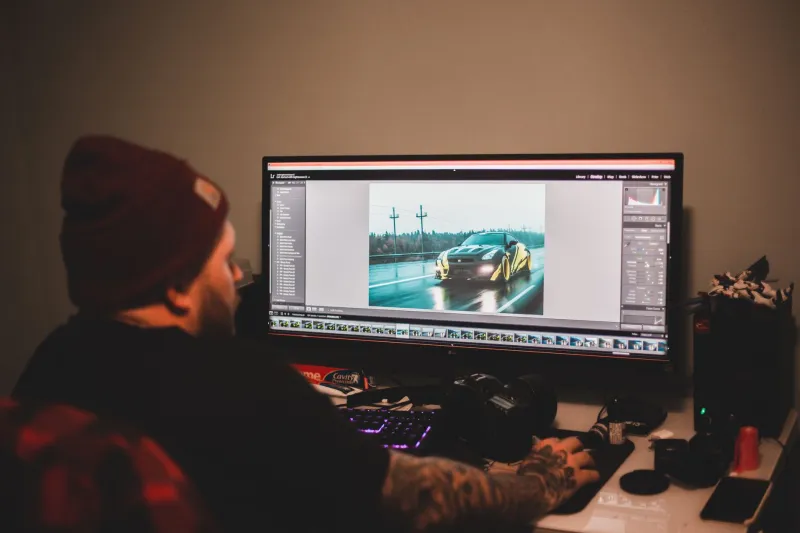
There is a moment in the editing process — familiar to photographers, cinematographers, and digital artists alike — when a single slider goes one stop too far. The image snaps into a kind of hyper-clarity, every edge traced with a precision that no human eye, no analog lens, no natural light source ever actually produced. The result looks impressive at a glance. On closer inspection, it feels profoundly wrong.
This is the quiet crisis at the center of contemporary visual production. As processing tools have grown more powerful and accessible, the temptation to push sharpening, clarity, and texture enhancement to their technical ceiling has become nearly irresistible. The consequences, however, are measurable — in viewer disengagement, in the erosion of emotional texture, and in a creeping sterility that is beginning to define entire genres of commercial imagery.
The Neuroscience of Softness
Human vision does not operate like a camera sensor. The eye processes a scene with variable acuity — sharp at the center, progressively softer toward the periphery, and constantly in motion. When the brain encounters an image rendered with uniform, edge-to-edge sharpness, something registers as artificial. The visual system expects a falloff. It anticipates imperfection. When neither arrives, trust erodes.
Research in perceptual psychology supports what many experienced image-makers already intuit: slight optical softness, gentle grain structures, and natural lens aberrations cue the brain toward authenticity. These imperfections function as a kind of visual handshake — a signal that what is being viewed belongs to the physical world rather than a rendered simulation of it. Strip them away entirely, and the image enters a territory not unlike the uncanny valley of character animation, where technical excellence paradoxically produces discomfort rather than admiration.
What Commercial Photography Lost in the Transition
The shift from film-based workflows to fully digital pipelines brought extraordinary gains in consistency and control. It also introduced a new set of failure modes that the industry is still reckoning with.
Consider the trajectory of beauty and lifestyle advertising over the past decade. Early digital photography carried forward many of the visual habits of film — moderate contrast, gentle focus fall-off, a certain luminous softness in highlights. As retouching capabilities expanded, so did the ambition to eliminate every variable. Skin became surfaces. Fabrics became diagrams. The images grew technically immaculate and emotionally hollow.
Some of the most celebrated commercial photographers working in the US market today have responded by deliberately reintroducing analog constraints into digital workflows. They shoot wide open on vintage glass, embrace halation in highlights, and resist the sharpening pass in post-production. The resulting work carries an unmistakable quality — a sense of presence and warmth that hyper-processed imagery simply cannot replicate.
Music Videos and the Return of Grain
Few corners of the visual media landscape have embraced this counter-movement more visibly than the music video space. Directors working with artists across genres — from indie folk to mainstream R&B — have made a conspicuous return to grainy, slightly soft, optically imperfect aesthetics. The reasons are both technical and strategic.
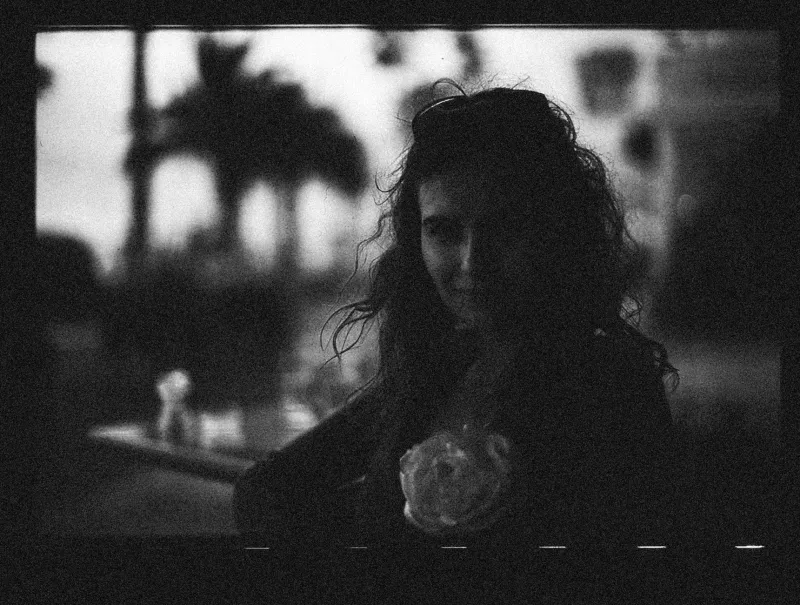
Grain introduces temporal variation. Each frame in a sequence carries slightly different noise patterns, which creates a subtle liveliness that clean digital footage lacks. When a close-up of a performer's face is rendered with visible grain and a shallow, slightly imprecise focus, the viewer leans in. The imperfection invites interpretation. It suggests interiority.
Contrast this with the over-sharpened, noise-reduced aesthetic that dominated mid-2010s video production — a look characterized by aggressive detail recovery, crushed shadows, and a plasticky luminance that aged poorly and connected weakly. The pendulum has swung, and it has done so in direct response to audience fatigue with images that feel processed rather than felt.
Social Media and the Clarity Arms Race
Perhaps nowhere is the over-sharpening problem more acute than in content produced for social platforms. The compressed delivery environment of Instagram, TikTok, and similar platforms creates a perverse incentive: creators over-sharpen their source material to compensate for anticipated compression artifacts, producing images that arrive at the viewer's screen looking simultaneously degraded and aggressively processed.
The result is a visual register that has become so ubiquitous it has ceased to communicate anything at all. When every image is sharpened to the same aggressive ceiling, sharpness loses its power as a signal of quality or intention. It becomes noise.
Creators who have broken through this visual monotony share a common characteristic: they treat softness and restraint as compositional tools rather than deficiencies to be corrected. A slightly underprocessed image on a platform full of hyper-clarified content does not read as low quality — it reads as deliberate. In a crowded feed, restraint is a form of distinction.
The Case for Optical Imperfection
This is not an argument against technical skill or careful post-production practice. Precision matters. Intentionality matters more. The distinction lies between sharpening that serves the image's emotional purpose and sharpening that simply demonstrates the capability of available tools.
A portrait rendered with clinical edge acuity may showcase the resolution of a medium-format sensor. It rarely showcases the humanity of the subject. A landscape processed to reveal every mineral vein in a distant rock face may impress in a technical forum. It seldom moves the viewer who encounters it in a gallery or on a screen.
The most durable visual work — the images and sequences that accumulate meaning over time rather than exhausting themselves in a single impression — tend to carry some quality of incompleteness. A slight softness in the focus. A whisper of grain in the shadows. A highlight that blooms rather than clips. These are not failures of craft. They are the marks of an image that understands its own limits and, in that understanding, becomes more fully human.
Practicing Restraint in a Maximum-Clarity Culture
For practitioners working within commercial and editorial contexts, the practical challenge is substantial. Clients frequently equate sharpness with quality, and the burden of educating them falls on the image-maker. The conversation is worth having.
Presenting comparative edits — one processed to the technical ceiling, one pulled back to a more optically natural state — often produces a revealing result. Viewers who initially reach for the sharper version, when asked which image they would want to live with or return to, frequently choose the softer one. The preference exists. It simply requires permission to express itself.
At The VME Studio, the principle that guides our approach to visual production is straightforward: technical capability is a resource, not a mandate. The question is never how sharp an image can be. The question is how sharp it should be — and whether the answer to that question serves the story being told or merely the tools being used to tell it.
In the end, the images that endure are not the ones that demonstrate what the equipment can do. They are the ones that communicate what the moment felt like. Those two objectives are not always the same. Knowing the difference is what separates technical execution from genuine visual craft.