Proof of Hands: Why Audiences Trust the Mess More Than the Masterpiece
There is a particular irony embedded in the current moment of visual media. Tools that generate photorealistic imagery, color-perfect cinematography, and seamlessly edited video have never been more democratized or more capable. And yet, the content that earns the deepest audience loyalty is frequently the content that looks like someone almost didn't finish it in time.
This is not a nostalgic retreat from quality. It is something far more deliberate and, for those who understand it, far more strategically significant.
The Signal Hidden in the Imperfection
When an audience watches a behind-the-scenes clip and sees a director reshoot a line three times, or observes a designer's sketchbook filled with crossed-out concepts, something neurological happens that polished content rarely triggers. The viewer's brain registers evidence of decision-making. They are not simply receiving a finished artifact—they are witnessing a human being navigate uncertainty, make choices, and commit to a direction.
This is the core of what might be called the authenticity gap: the distance between what a perfectly rendered piece of work communicates and what a visibly effortful one does. Flawless execution, paradoxically, can obscure intention. When every frame is pristine and every cut is surgical, the audience has no entry point into the process. The work appears to have arrived fully formed, and that absence of visible struggle can register—subconsciously, but powerfully—as a kind of dishonesty.
Visible craft, by contrast, is legible. It tells the audience: a person was here, making something, and you can see where they were.
The Behind-the-Scenes Economy
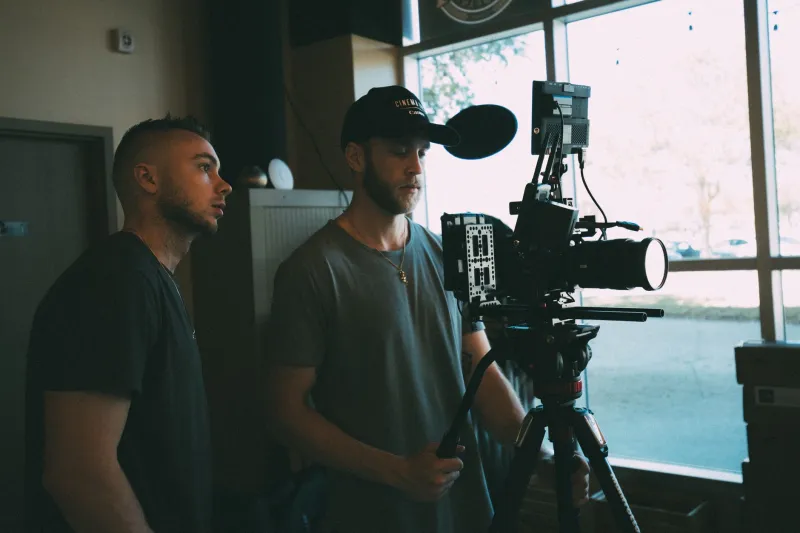
This dynamic has reshaped how creators package and distribute their work across every tier of the industry. Major studios now invest significantly in making-of content not merely as promotional material but as a parallel narrative that validates the primary one. When audiences see the practical effects team building a physical set, or watch an actor work through the emotional preparation for a difficult scene, the finished film gains a layer of credibility that no amount of visual effects polish could manufacture.
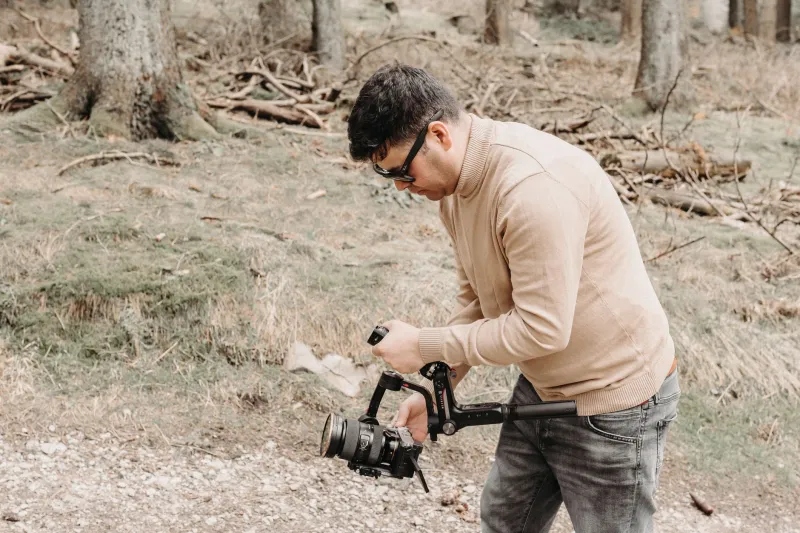
Independent filmmakers have understood this intuitively for years, largely because they had no choice. Limited budgets forced a certain rawness into their work, and audiences responded to it. What began as necessity has since been recognized as strategy. The rough cut shown at a festival screening, the visible boom mic shadow that made it into a final edit, the handheld shake during a particularly kinetic sequence—these elements communicate that a human being was present behind the camera, making real-time decisions under real-world constraints.
The irony is that studios with the resources to eliminate every imperfection now sometimes choose not to, precisely because they have observed what that elimination costs them in terms of perceived sincerity.
When Polish Becomes Suspect
The shift in audience psychology here is worth examining carefully. For much of the twentieth century, production value was synonymous with trustworthiness. A well-lit, crisply edited piece of content carried institutional authority. Rough edges suggested amateurism, and amateurism suggested unreliability.
That equation has been fundamentally disrupted—not by a change in audience sophistication, but by a change in the production landscape. When AI tools can generate a photorealistic image in seconds, when color grading presets can transform iPhone footage into something that resembles a major studio production, and when template-driven motion graphics can dress up any content with the visual vocabulary of professional broadcast, the surface markers of quality no longer function as reliable signals of human investment.
Polish has been decoupled from effort. And audiences, even those who could not articulate the mechanism, have registered this decoupling. The result is a recalibration of trust signals. If anyone can produce something that looks expensive, then looking expensive no longer communicates what it once did. What communicates instead is evidence of process—the things that cannot be templated or generated because they are specific to a particular human being working through a particular creative problem.
Transparency as Craft
It would be a mistake to interpret this trend as a simple endorsement of sloppiness. The creators who have most effectively leveraged visible process are not simply releasing unfinished work and calling it authentic. They are making deliberate choices about which imperfections to reveal and how to frame them.
A documentary filmmaker who chooses to leave in a moment where their subject breaks the fourth wall is not failing to control their material—they are exercising editorial judgment about what that moment communicates. A graphic designer who shares a time-lapse of their working process, including the false starts and abandoned directions, is curating a narrative about their methodology. The rawness is real, but its presentation is intentional.
This is the sophistication that separates strategic transparency from simple carelessness. The goal is not to appear unfinished. The goal is to make the human hand visible within the finished work—to ensure that the audience can trace the evidence of decision-making through the final product and feel, however unconsciously, that a person was responsible for every choice.
What This Demands of Visual Practitioners
For designers, cinematographers, directors, and creative directors working in today's environment, this shift carries practical implications that extend beyond aesthetic preference.
First, it demands a reconsideration of what the deliverable actually is. In many contexts, the process documentation is as valuable as the finished piece—sometimes more so. Studios and agencies that treat behind-the-scenes content as an afterthought are leaving a significant trust-building asset underutilized.
Second, it requires a more honest internal conversation about what kinds of imperfections are meaningful and which are simply careless. Not every rough edge signals humanity. Some rough edges just signal a missed deadline. The distinction matters, and audiences are increasingly capable of sensing it.
Third, and perhaps most importantly, it asks practitioners to resist the reflex toward maximal polish as the default definition of quality. Quality, in the current moment, is increasingly defined by legibility of intention—by whether an audience can feel the presence of a directing intelligence behind the work. That intelligence can be communicated through pristine execution, but it can also be communicated, sometimes more powerfully, through the visible evidence of how the pristine execution was earned.
The Enduring Value of the Visible
The deeper truth embedded in this moment is not that audiences have lowered their standards. They have raised them in a direction that the industry did not anticipate. They are demanding more than technical correctness. They are demanding proof that a human being cared enough to struggle with the work.
In a media environment increasingly saturated with content that looks like it was assembled rather than made, the most powerful thing a visual practitioner can offer is evidence of genuine engagement with the problem. That evidence does not always look like perfection. Sometimes it looks like the moment before perfection—the visible effort, the honest process, the mark of hands that were actually present.
That mark, more than any rendering quality or production value, is what audiences are learning to look for. And those who understand how to make it visible are the ones building the deepest, most durable creative authority in the field.