Recognized and Rejected: Why Stock Footage Triggers Instant Distrust in Modern Audiences
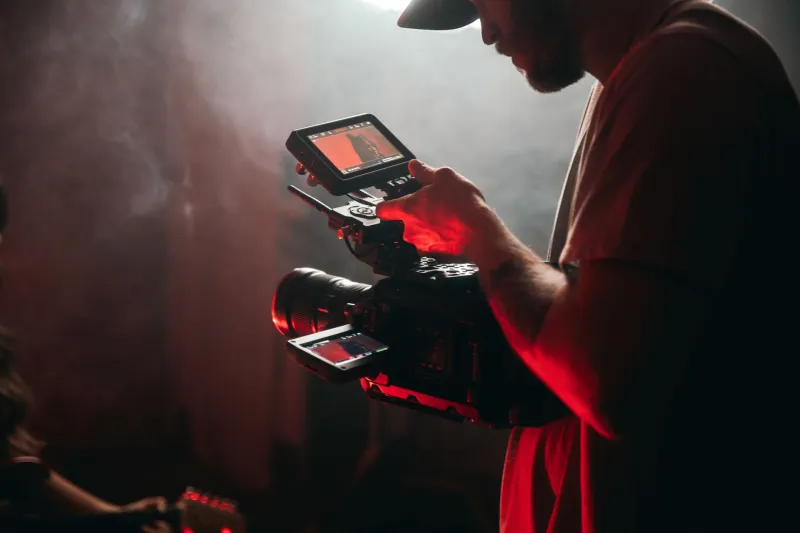
The Moment the Illusion Breaks
Something happens in the first few seconds of watching a video that features generic stock footage. The brain registers the composition, the lighting, the wardrobe choices, the too-perfect smile of a model gesturing toward an invisible product — and something quietly misfires. The viewer does not always articulate it. They may not even consciously notice. But the connection is severed. The story, whatever it was attempting to communicate, has already lost the argument.
This phenomenon is not simply a matter of taste. It is rooted in how human perception processes authenticity, and understanding it is one of the most strategically important things a visual communicator can do right now.
Why the Brain Knows Before the Mind Does
Neuroscientists have long documented the brain's extraordinary capacity for pattern recognition. We are wired to detect repetition, familiarity, and — critically — incongruence. When a visual narrative claims to represent a specific person, brand, or experience, but the imagery used to support that claim has been catalogued across thousands of other productions, something in the viewer's perceptual system flags the inconsistency.
This is the visual equivalent of the uncanny valley — a concept originally applied to robotics and CGI characters that appear almost human but not quite. The unease generated by that near-miss is disproportionate to the technical flaw. Generic stock footage operates on a similar principle. It is not that the footage is poorly made. Often it is beautifully lit, competently shot, and technically irreproachable. The problem is precisely that it is too smooth, too universal, too carefully constructed to represent no one in particular. And audiences, even casually, recognize the shape of that emptiness.
The Cultural Context of Visual Fatigue in America
In the United States, audiences are among the most visually saturated on the planet. From streaming platforms to social media feeds to digital advertising, American consumers navigate an estimated 4,000 to 10,000 brand impressions per day. Within that volume, the visual shorthand of stock imagery has become its own recognizable genre — the multiracial team laughing around a conference table, the woman staring thoughtfully at a laptop in a sunlit café, the close-up handshake signaling corporate trust.
These images are not offensive. They are simply legible as fabrications. And in a media landscape where audiences have developed sophisticated, almost involuntary filters for inauthenticity, legibility as fabrication is a serious liability. The viewer who recognizes the stock aesthetic does not just disengage — they often transfer that distrust directly to the brand or project associated with it.
The Strategic Cost of Generic Imagery
For creators operating across commercial, editorial, or independent contexts, the stakes of this dynamic are significant. A brand film that relies on stock footage to convey human connection may achieve technical competence while failing entirely at emotional resonance. A documentary that supplements original footage with generic b-roll risks undermining the credibility of its primary material. Even a well-designed website can feel hollow when its visual language is borrowed from a library that has served a thousand other websites first.
The cost is not always immediate or measurable in conventional metrics. But it compounds. Audiences who feel subtly deceived — even without identifying the source of that feeling — are less likely to engage, share, or return. In an attention economy, that erosion is consequential.
What Authentic Visual Assets Actually Look Like
The alternative to generic imagery is not necessarily expensive or technically demanding. It is specific. Authenticity in visual media is largely a function of particularity — the detail that could only belong to this story, this place, this person.
A few principles guide the most effective approaches:
Specificity over perfection. A slightly imperfect image that is genuinely connected to the subject will consistently outperform a technically flawless image that is not. Grain, unconventional framing, and natural lighting conditions are not liabilities — they are signals of real presence.
Environment as character. Generic footage tends to occur in generic spaces — neutral offices, anonymous parks, sanitized kitchens. Original visual work embeds its subjects in environments that carry meaning. The specific clutter of a working studio, the particular light of a real location at a real time of day — these details communicate authenticity before a single word of copy has been read.
Casting for reality, not representation. Stock footage often features talent selected to represent demographic categories broadly. Original production allows for casting that reflects actual communities, actual relationships, actual professional contexts. The difference registers immediately, even subconsciously.
Practical Strategies for Creators Working Under Real Constraints
Not every project has the budget for a full original production. That constraint is real, and dismissing it is not useful. But there are actionable strategies that sit between expensive custom shoots and the default stock library.
Micro-documentary approaches — brief, unscripted captures of real people in real environments — can yield footage that feels genuinely original at a fraction of traditional production costs. Many creators have found that a single day of documentary-style shooting with a small crew produces a library of authentic material that outlasts and outperforms months of stock licensing.
Partnerships with local photographers and cinematographers offer another path. Regional creative talent often has deep familiarity with the specific visual character of a community or industry, and the resulting work carries a specificity that no stock library can replicate.
For projects where stock is unavoidable, curation discipline matters enormously. The difference between stock that reads as generic and stock that reads as intentional often comes down to how selectively it is deployed, how it is graded and integrated, and whether it is contextualized by surrounding original material that establishes a distinct visual voice.
Elevating the Standard
At its core, the problem of generic imagery is a problem of creative ambition. Stock footage exists because it is efficient, and efficiency is a legitimate value. But efficiency in service of visual communication should never come at the expense of the fundamental goal: connecting with an audience in a way that feels true.
The creators and studios producing the most resonant work right now are not necessarily those with the largest budgets. They are the ones who have internalized the idea that every visual choice is an argument — an implicit claim about what is real, what matters, and who the audience is. When that argument is made with borrowed imagery, audiences sense the evasion. When it is made with something genuinely seen and genuinely felt, they lean in.
That is the standard worth building toward. And it begins with the decision to stop reaching for the familiar frame and start looking for the one that could only belong to this particular story.